

Article: Jacey Gailliard x Sirius Film: Reimagining Ballet Photography
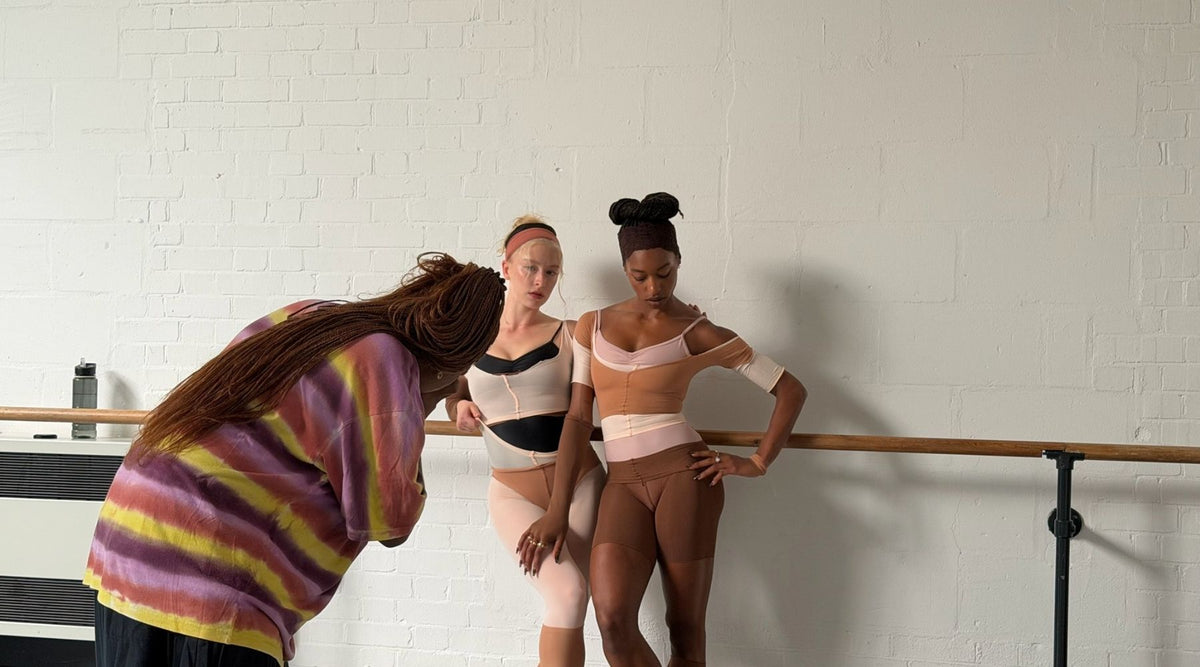
Jacey Gailliard x Sirius Film: Reimagining Ballet Photography
Imperfect Pointes founder Helen Banks talks to London photographer Danika Magdelena / Sirius Film about photographing San Francisco Ballet Demi Soloist Jacey Gailliard.
The editorial brought together San Francisco Ballet Demi Soloist Jacey Gailliard and London photographer Danika Magdelena, also known as Sirius Film, to explore what ballet photography can become when it draws on fashion, sport and contemporary culture.

Dani and I first met in London back in 2018.
At the time, I was the brand client on campaign shoots for ASICS, working with music artists including Novelist and Sam Wise from House of Pharaohs. Dani was behind the camera, shooting BTS from her perspective.
We kept in touch, and over the years I’ve watched her photography career go from strength to strength.
She’s gone on to photograph some seriously brilliant people across music, fashion and sport and work with brands and publications including Vogue, adidas and Nike. All the time, I had this thought at the back of my mind that I would love for us to work together again.
I just needed to find the right project.
Then Jacey Gailliard came to London.
Jacey is a Demi Soloist with San Francisco Ballet and an extraordinary dancer. We first connected a couple of years ago over Imperfect Pointes ballet tights, and when I found out she would be in London during a break between UK tour dates, we agreed to collaborate.
I knew from the beginning that I didn't want to photograph her in the way ballet dancers are usually photographed.
Maybe that's because I didn't want this to look like a traditional ballet shoot. My own creative background came through fashion and streetstyle rather than classical dance, and Dani was part of that world when we first met.
Eight years later, I'm running Imperfect Pointes, she's shooting Vogue, adidas, musicians and some of the biggest names in sport, and somehow our paths have merged again with Jacey.
That crossover was exactly what interested me.
Ballet dancers are artists, but they're also elite athletes. Increasingly they're part of fashion and wider culture too, and Jacey has an incredible sense of style both inside and outside the studio.
Yet so much ballet photography still exists within its own very recognisable visual world.
I wanted to see what happened when somebody from outside that world photographed one of its most exciting dancers.
And there was another layer to it.
Jacey is a Black ballerina working at the highest level of classical ballet. I was conscious not only of who we were putting in front of the camera, but who was behind it too.
For me and for Imperfect Pointes, representation shouldn't stop at the person we see in the finished photograph. It also matters who gets commissioned, who gets to shape those images and whose visual perspective we bring into ballet.
But first and foremost, I chose Dani because I love her work. I'd wanted to work with her again for years. This was finally the right shoot, and personally, it was a big deal for me.
In conversation with Danika Magdelena / Sirius Film
We first met back in 2018 on those ASICS shoots with Novelist and Sam Wise. Do you remember that period of your career? When you look back at the photographer you were then compared with now, what do you think has changed most?
Dani: Yeah, I do remember that period. I remember the enthusiasm I had to work, meet people, connect with brands and meet other creatives. It was just so exciting to be getting those opportunities to shoot for brands because it wasn't something I'd imagined myself doing before that.
I guess what's changed now is that it's become more normal for me. But 2018 was such a different time. It felt like there was so much going on and people really wanted to connect. It was a nice time.
Since then you've photographed people across music, fashion and sport, musicians, models and elite athletes, but you hadn't really come from the ballet world. What appealed to you about photographing Jacey?
Dani: Even though I hadn't worked much with dancers before, I love observing and watching dance. Ballet is such an amazing skill to be able to do.
I was really excited to meet Jacey because when I looked her up beforehand I was just like, wow, this girl is so talented.
It was also really refreshing to see a Black woman in an industry that can be difficult to break into. Across a lot of creative fields it can sometimes be hard to meet people who look like you.
With Jacey, I was just like: wow, she's a star. I was excited to meet her and photograph her.
Ballet photography is usually very concerned with getting the “perfect” ballet moment, the correct line, position, foot or shape. Your photographs tend to feel much more instinctive and interested in the person. Did not having that traditional ballet photography background affect the way you approached Jacey?
Dani: Obviously, not having experience shooting dancers in the past meant that technically I might not always know exactly what was going on.
But I still think that when you have an eye for what looks good, you can see when something looks good.
Even though I might not know all the ballet positions and terminology, I could see where I felt Jacey looked good. And obviously it was helpful having people there who do know ballet, so we could check certain positions and details.
But I wasn't trying to think too much about the technical side. I was more interested in what looked good, shooting as much as possible and then reviewing afterwards.
I think having an eye for something still helps you bring it all together.

Jacey obviously has an extraordinary awareness of her own body and movement, but she's also got a huge amount of presence when she's simply standing in front of the camera. What did you notice about her? Was there a moment when you thought: we've got it?
Dani: With Jacey, she's obviously a professional. She knows what she's doing and she has experience performing and being in front of the camera, so it was just effortless to shoot her.
Everything she was doing looked amazing.
It was exciting because you knew you were going to look back at the photographs and there would be these crazy things she was doing that just looked really good.
But even when you think you've got it, I always feel like you should just keep going.
You never know what else you're going to get. Until the moment is actually gone, you might as well keep seeing what can happen.
You've photographed a lot of elite athletes, particularly through your work in football. Did shooting a ballet dancer feel more like photographing an athlete, a fashion subject or a performer?
Dani: I guess I approach all my shoots in the same way.
I don't try to think too much about who the person is or their profession. For me it's more about connecting with them, because whatever they do, they're also just a human being with their own interests and personality.
You want to connect with the person and get the best energy out of them.
Obviously there's a certain professionalism that comes with photographing people at that level, and there can be expectations around that, but I still try to approach everyone in the same way.
You've photographed so many Black artists, athletes and creatives throughout your career. With this shoot we were photographing a Black woman within classical ballet, an art form that has historically presented quite a narrow idea of what a ballerina looks like. Did that change anything about the way you approached the images?
Dani: I wouldn't say I was consciously trying to bring something completely different. With everyone I photograph, I'm trying to capture them in the best way possible and make them feel happy and comfortable.
But especially when I'm photographing Black women, skin is really important. There are little components you consider, how somebody is lit, how their skin looks, making sure you're presenting them in the best way possible.
So with Jacey, it wasn't necessarily that I came in thinking I needed to do something completely different. I just wanted to capture her in the best light possible.

I also wanted to ask you about Girls Don't Cry. The project was about women, identity and self-expression, subjects that overlap with a lot of the things we care about at Imperfect Pointes. Do those ideas still feed into how you photograph women now?
Dani: Oh my God, that project doesn't exist anymore. RIP Girls Don't Cry!
But even though the project itself doesn't exist, I think I still carry the same values with me. I guess I'm just living and breathing them now.
When I photograph women, or anybody really, I want to let people present themselves in the way they want to be presented, while bringing my own eye to it and hopefully making them feel beautiful.
I think there's always a message there somewhere, even if it isn't completely obvious or consciously in your face.
People might assume a shoot like this involves a huge amount of photographic equipment, but the setup was actually very simple. You shot Jacey digitally and worked mainly with the natural light in the studio. Why do you like working that way?
Dani: Yeah, we actually shot this digitally, we didn't shoot film.
And we really didn't have much lighting equipment. We were mainly just working with the natural light we had at that time of day.
I love trusting the light more than anything.
Obviously when it gets darker sometimes you need to bring in lights or flash, and for particular creative shoots you might want a very specific lighting setup, but I just love the sun.
A lot of my work is shot outdoors or using natural light.
You get shadows and interesting shapes that way, and I just really like working with what is already there.
So with Jacey we worked with the natural light, and it was good. Sometimes keeping it simple is enough.
Jacey Gailliard on the shoot
We also asked Jacey what it was like to finally collaborate with Imperfect Pointes after being in touch for the past two years - and how it felt to work with Danika behind the camera.
You and Imperfect Pointes had been talking about working together for a while. How did you find the shoot?
Jacey: I really enjoyed getting to work with Imperfect Pointes. Helen and I had been in conversation for the past two years, so it was really nice that on my first trip to London we were finally able to make it happen.
I had such a great time with Helen, Danika, Romy and Michaela. Everyone was so welcoming and kind, and the energy felt comfortable from the start.
It was also my first time working with a Black photographer. Working with Danika felt very natural and comfortable - I felt like I could express myself and she could capture those moments as they really were. I'm really appreciative that Helen brought us together and gave us both the opportunity to have that experience.
What were your favourite looks from the day?
Jacey: When I first saw the Imperfect Pointes polka dot leotard on social media, I knew it was something I'd love to have in my own wardrobe, so I was really excited to shoot that. That was definitely one of my favourites.
I also loved the layered tights look. I'd seen so much balletcore styling online, on Pinterest and on other dancers, so it was really cool to see our own version of that come to life.
This was also your first visit to the UK with San Francisco Ballet. What was it like performing in London and Edinburgh?
Jacey: It was an amazing three weeks. It was my first time in the UK, so it was great to have the chance to explore London and Edinburgh as well as perform.
It was really special to be able to share the work we'd spent so much time creating in San Francisco with audiences in the UK.

When ballet meets another visual world
What I love most about this project is that it doesn't feel like ballet trying to look like fashion.
And it doesn't feel like fashion borrowing ballet because ballet happens to be culturally interesting right now.
A San Francisco Ballet Demi Soloist. A London photographer whose visual language comes through music, fashion, youth culture and sport.
And me, somewhere in the middle, still bringing a lot of the references I had before Imperfect Pointes existed into what the brand is becoming now.
Eight years after I first watched Dani photographing musicians in London, I finally got her behind the camera for Imperfect Pointes. It was worth waiting for.



Leave a comment
This site is protected by hCaptcha and the hCaptcha Privacy Policy and Terms of Service apply.