
What can my body do? Why we’re supporting Project RED-D
A few years ago, we shared a post on the Imperfect Pointes Instagram that simply said:
HOW ABOUT: what can my body do?
NOT: how much does it weigh?

I still believe that just as strongly today.
In fact, it has become much more personal.
Imperfect Pointes has been building a relationship with Project RED-D, an organisation working to raise awareness of Relative Energy Deficiency in Dance (REDs) and to give dancers, parents, teachers and the wider dance community access to evidence-based information and support.
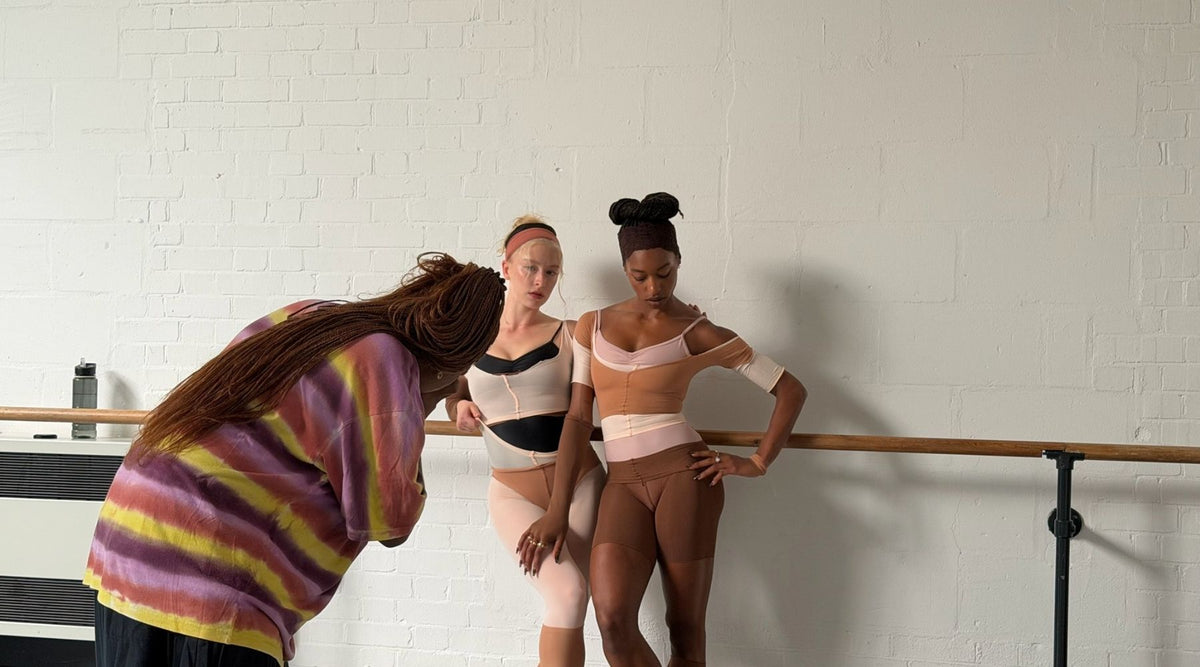
We’re now strengthening that relationship, and soon we’ll be taking it a step further with a collaborative leotard, with a proportion of the profits going directly to Project RED-D.
But before we talk about the leotard, I wanted to explain why this subject matters so much to me.
RED-D stands for Relative Energy Deficiency in Dance
Until around three years ago, I knew very little about Relative Energy Deficiency in Dance, the dance-specific expression of REDs, Relative Energy Deficiency in Sport.
That changed very suddenly for our family in 2023.
My teenage daughter was training at a top vocational ballet school when she developed a particularly debilitating stress fracture in her lower back, in the lumbar spine. At first, I assumed the explanation was fairly straightforward: the intensity of her training, the workload and the pressures of being in a highly competitive ballet environment.
Those things were part of the picture. But there was much more going on, and I wish we had understood REDs earlier. There is also ballet’s complicated relationship with body image: the constant scrutiny, comparison and striving for an idea of ‘perfection’ that doesn’t really exist. That pressure can affect how dancers eat, train, recover and see their own bodies.

REDs can occur when a dancer is not taking in enough energy to meet the combined demands of training, performance, growth and everyday life. Over time, that low energy availability can affect multiple systems in the body, including bone health. Bone stress injuries are one of the recognised consequences, which is why current dance-specific clinical guidance recommends considering REDs when a dancer presents with a bone stress injury.
My daughter has fully recovered, and she has started her professional ballet career. But she was unable to dance for a year. She had to move into the school year below, away from the peer group she had trained alongside, and the emotional and psychological impact of that period was enormous.
Looking back, there were signs that we missed. I don’t say that with hindsight to blame ourselves, her school or any one person. We simply didn’t have the awareness or the language we needed.
REDs was not something we understood well enough to recognise, question or talk openly about.
And that is the part I keep coming back to.
Could the injury have been prevented? I can’t know that. But I do know that I wish we had understood much earlier that fuelling, recovery, hormonal health, bone health and workload are interconnected - and that dancers can be struggling with low energy availability without it being obvious from the outside. REDs for dancers is not defined by a particular body shape or weight.
I wish we had felt able to ask better questions, and that we had known where to find specialist, evidence-based support before an injury forced us to.
That experience is why I feel so strongly about raising awareness of REDs in dancers now.
As a parent, I would like other parents and dancers to know what I didn’t know. As somebody who works within the dance world, I want young dancers to grow up understanding that adequately fuelling their bodies is part of their training, not something separate from it. And as the Founder of Imperfect Pointes, I feel we have a responsibility to use the platform we have to help make those conversations more normal.
That is why our relationship with Project RED-D matters to me personally -and why we want it to be an ongoing relationship rather than a one-off campaign.
How Imperfect Pointes’ relationship with Project RED-D began
Our relationship with Project RED-D began earlier this year. Since Valentine’s Day 2026, we’ve been including a Project RED-D fact sheet with every Imperfect Pointes order, as well as handing them out at our dancewear pop-up shopping events.

For me, that was a practical place to start: putting clear, useful information directly into dancers’ hands. It meant that awareness of REDs in dancers wasn’t just something we talked about online - it became something we could build into the everyday way we communicate with our community.
And that relationship is now developing further, with plans underway for an Imperfect Pointes × Project RED-D collaboration leotard, where a proportion of the profits will go directly to support their work.
“Putting RED-D information directly into dancers’ hands is how we turn awareness into prevention. When dancers understand the signs, they can protect both their health and their performance.
Imperfect Pointes’ commitment to challenging perfection culture and championing dancer wellbeing aligns so strongly with our mission, and this collaboration is a powerful step towards a more sustainable future for dance.”
— Karen Sheriff, Executive Director, Project RED-D
This October, in my role as Founder of Imperfect Pointes, I’ll be joining Karen Sheriff of Project RED-D at One Dance UK’s Body Perspectives: Re-evaluating the Ideal, in partnership with the National Institute of Dance Medicine and Science (NIDMS), sharing practical examples of how we can bring about change across the dance industry.
I am really excited about launching our collaborative leotard and more details will be revealed soon, so keep an eye on our social channels and make sure you're on the list for first access here.
Follow Imperfect Pointes and Project RED-D on Instagram.



Laisser un commentaire
Ce site est protégé par hCaptcha, et la Politique de confidentialité et les Conditions de service de hCaptcha s’appliquent.